Opening a restaurant means making a thousand decisions in the last sixty days, and uniforms usually land at the bottom of the list until someone realizes the soft opening is in two weeks. The good news: outfitting a full team well is a solved problem if you sequence it right.
Start with roles, not garments. List every position a guest will see (host, server, bartender, runner, manager) and every position they won't (line, prep, dish). Front of house carries your brand, so that is where the design attention goes. Back of house is about durability, heat, and laundering, so that is where the fabric attention goes.
For front of house, pick one anchor piece per role and keep the rest simple. A server in a well-fitted apron over a plain shirt reads sharper than one in five branded pieces. Bartenders can carry a heavier statement piece like a bistro apron or vest because they stand still long enough for guests to notice.
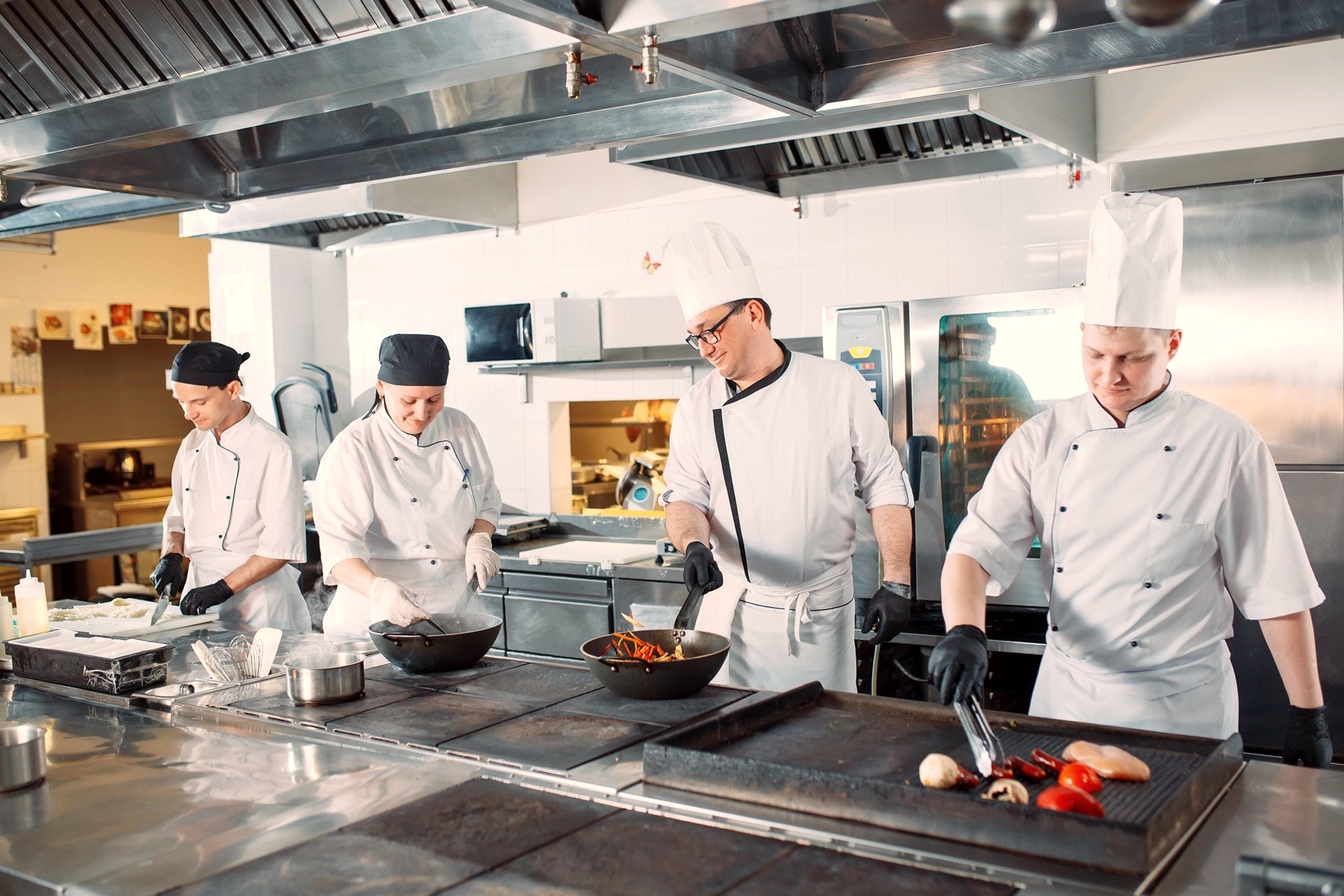
For the kitchen, buy for the wash cycle, not the showroom. Chef coats and kitchen shirts live and die by industrial laundering, so poly-cotton twills outlast pure cotton, and darker colors forgive what bleach cannot fix. This is also where a laundry program earns its keep: if coats are picked up, washed, and returned on a schedule, you can buy fewer of them per cook.
Health code touches apparel more than most owners expect. The FDA Food Code requires food employees to wear clean outer clothing and effective hair restraints, and your local inspector will read a stained coat as a signal about everything they cannot see. Buying enough units per cook to survive the wash rotation is a compliance decision, not a vanity one.
Order sizes before you finish hiring. It sounds backwards, but a size run weighted toward the middle (S through XL, heavier on M and L) covers most rosters, and a 5-unit minimum per style makes it cheap to fill gaps after the team is set. Keep ten percent extra of the most-worn pieces for turnover and mid-shift disasters.
Sequence the order in two waves. Wave one, six weeks out: kitchen kit and any custom front-of-house piece that needs sampling. Wave two, two weeks out: fill sizes from the actual roster and add the forgotten roles, because there are always forgotten roles: baristas, expo, weekend hosts, valet.
Finally, put your logo on fewer things than you think. One embroidered mark on the chest or apron bib is enough. Save the budget for fit and fabric, because a crisp plain shirt beats a wrinkled branded one every single service.
A word on aprons, because they are the highest-leverage garment in the building. An apron changes silhouette, covers spills, and carries the logo at eye level across a dining room, all for less than a shirt costs. Waxed canvas and denim read craft; classic twill reads bistro; cross-back straps spare shoulders on doubles. Buy aprons deeper than any other item, because they are also the piece staff lose, borrow, and take home to wash at the worst intervals. A par of two per server plus a shelf reserve keeps Friday from ever depending on Thursday night's laundry.
Footwear policy belongs in the opening plan even if you never buy a shoe. Kitchens are wet, dining rooms have stairs, and slip-resistant closed-toe language in the handbook, named by property not by brand, is what your insurer will ask about after the first comp claim. Decide it now, write it in the offer letter packet, and the conversation never has to happen on a busy night with a server in canvas sneakers.
Finally, photograph everything the week you open: every role, front and back, in the finished space. That photo set becomes the appearance standard new hires see before day one, the reference your supplier checks reorders against, and the before picture you will be glad to have when the concept evolves in year three. Opening chaos erases memory; the camera roll does not.
One Brooklyn opening we outfitted made the sequencing lesson vivid: the owner locked kitchen kit eight weeks out, sampled one custom server apron in week five, and spent opening week doing nothing about clothing at all, because there was nothing left to do. Compare that with the restaurateur down the block who ordered everything in one panicked week-three burst: right garments, wrong sizes, exchanges running through the soft open, and a team photo everyone involved has agreed never to discuss. Same budget, same supplier radius, completely different opening month. The difference was never taste or money; it was that one of them treated uniforms as a project with dependencies and the other treated them as a shopping trip. Sixty days, two waves, one fit session: that is the entire method, and it survives contact with any concept from fast casual to white tablecloth.