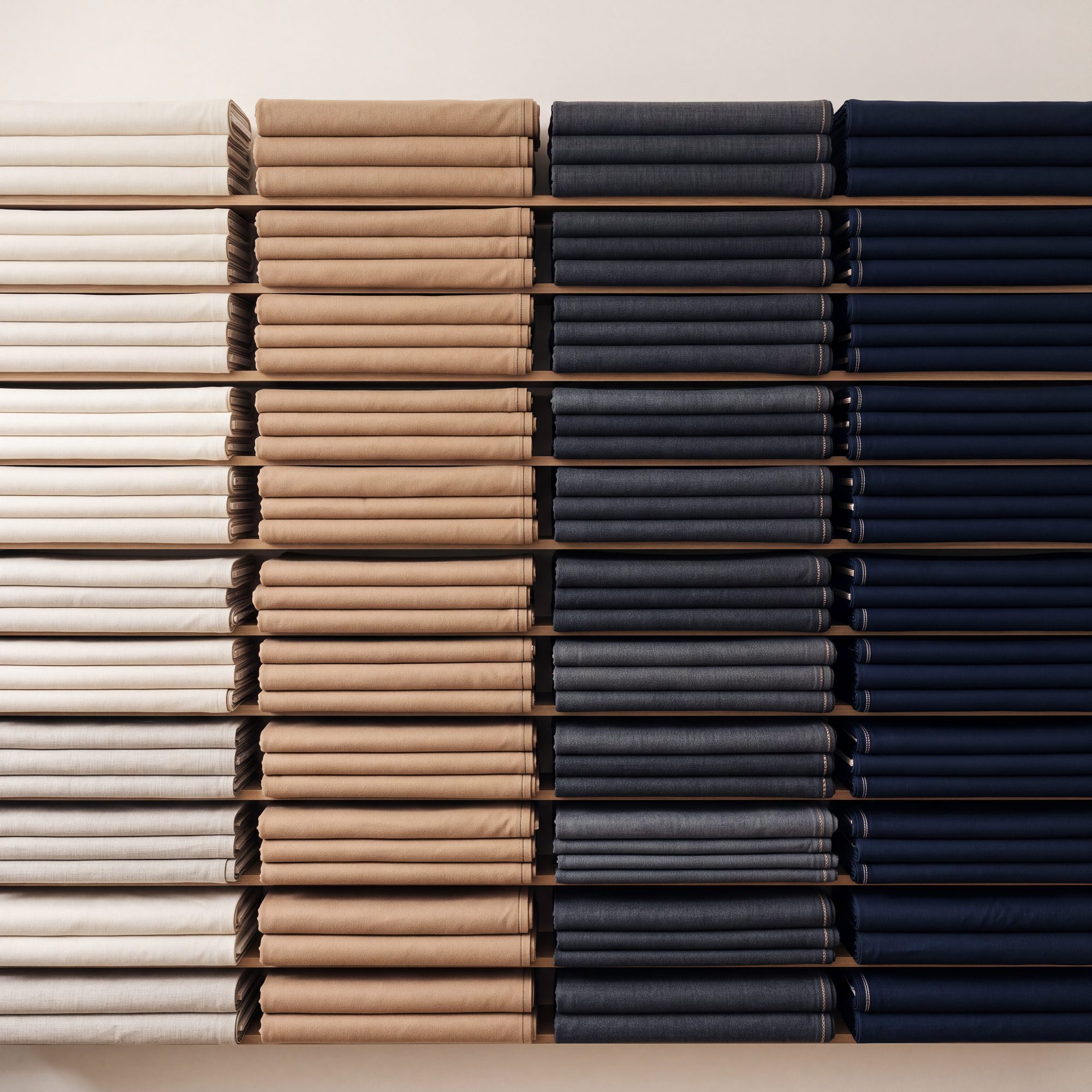
Fabric is where uniform programs are won and lost, because fabric decides how a garment feels at hour nine and looks at wash ninety. Three variables do most of the work: fiber content, weave, and weight.
Fiber first. Cotton breathes, feels premium, and takes color beautifully, but it wrinkles, shrinks when abused, and dries slowly. Polyester resists wrinkles and abrasion, holds color through industrial washing, and dries fast, but pure poly can feel plastic and hold odor. The workhorse answer is the blend: 65/35 or 60/40 poly-cotton twills dominate workwear because they take cotton's hand and poly's durability. For high-motion roles, a few percent of spandex buys stretch that reads as comfort and fits more bodies per size.
Weave second. Twill (the diagonal rib) hides stains and wear, which is why chef coats and work pants live there. Poplin is lighter and crisper for dress shirts. Pique's textured knit made the polo famous because it breathes and disguises wrinkles. Oxford is the durable, slightly casual dress weave. Canvas and duck are armor for aprons and outer layers. Terry and waffle absorb, which is their entire job in spa and hospitality.
Weight third, measured in ounces or GSM. Heavier is not better; heavier is slower to dry, hotter on the line, and more expensive to ship. A 4.5 oz poplin shirt and an 8 oz canvas apron are each correct in their own role and absurd in the other. Ask what weight a garment is before asking what it costs; suppliers who cannot answer are reading from the same catalogue you are.
Performance finishes are real but bounded: stain release genuinely sheds oil and coffee for a few dozen washes, moisture-wicking moves sweat in knits, antimicrobial finishes reduce odor. All fade with laundering, faster with harsh chemistry. Treat finishes as extending garment life and comfort, not as permanent properties, and re-spec when reorders arrive rather than assuming last year's fabric.
Match fiber to laundering reality. If your program uses industrial washing, cotton-rich fabrics shrink and fade faster; blends and poly-rich fabrics are built for it. If staff wash at home, forgiving wrinkle-resistant blends protect your appearance standard from every dryer setting in the borough.
Climate and role finish the spec: breathable cottons and pique for guest-facing summer roles, brushed twills and fleece-lined shells for docks and winter valet, four-way stretch for anyone who lifts, kneels, or reaches all shift, which is more roles than management usually thinks.
The one-line method: name the role's hardest hour, pick the fiber and weave that survive that hour, then buy the weight that survives the wash program. Color comes last, and by then it is easy.
Color fastness is the fabric property nobody specs and everybody notices: the navy that turns violet by wash forty, the black polo that grays out beside its younger replacement. Ask suppliers for colorfastness ratings to washing and light, and when a program grows past a hundred garments, insist reorders come from matched dye lots or accept a visible generation gap in the team photo.
Shrinkage math protects your size chart: cotton-rich fabrics can lose a size in hot industrial drying, and a fit session conducted on unwashed samples is a fiction. Sample garments should be evaluated after laundering the way your program actually launders, and stated shrinkage (sanforized or pre-shrunk claims) should appear on the spec sheet, because a half-inch across a chest is the difference between tailored and tight.
Finally, weigh the hand of the fabric against the story your prices tell. Customers touch your staff's sleeves at handoffs, across counters, in fittings, and a chintzy hand on a premium-priced service creates a dissonance no logo fixes. Fabric is the only part of your brand people feel with their fingertips; spend one grade above what the spreadsheet first suggests on the roles that get touched.
Reading a spec sheet takes two minutes once you know the five lines that matter: fiber content with percentages, weight in ounces or GSM, weave or knit construction, colorfastness ratings, and stated shrinkage. Anything a supplier cannot produce on paper, assume average and price accordingly. Then confirm the sheet with your hands and your washer: a sample laundered ten times in your actual program tells the truth about pilling, drift, and hand that no PDF will volunteer. Fabric is the layer of a uniform program where money hides, both the wasted kind (premium fiber dying young in industrial wash) and the well-spent kind (one grade up on the garments customers touch). The two-minute read plus the ten-wash test is how you tell which is which before the purchase order does.