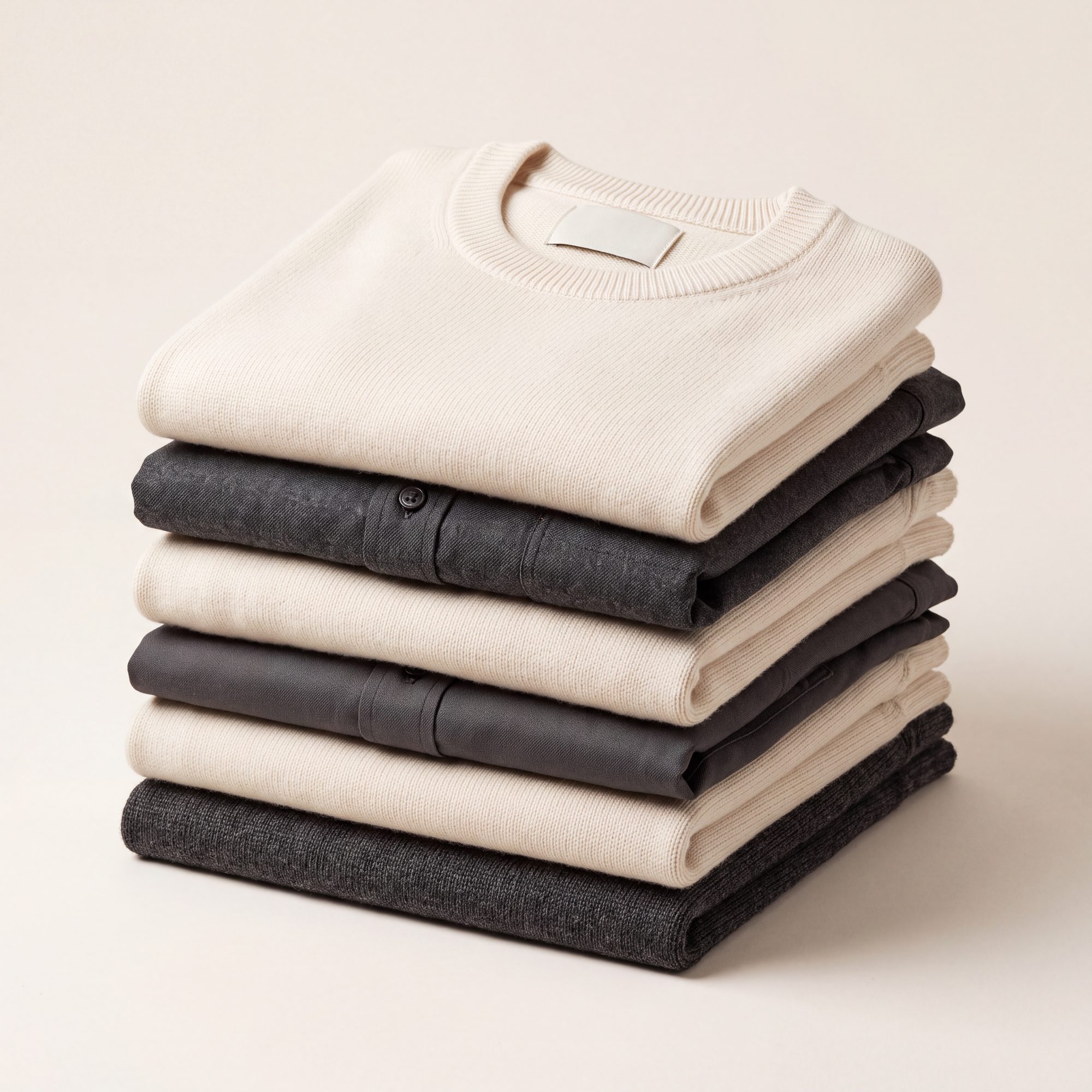
Every spa that sells its robes, every gym with a member line, every restaurant whose hats walk out the door started with the same realization: the thing you have been buying from a middleman could carry your name instead. Private label is the machinery for that, and it is more accessible than most owners assume.
The definition first: private label means goods manufactured for you, sold under your brand, with your label inside. You are not reselling someone's catalogue with a logo added; the product is yours, its spec sheet is yours, and its margin is yours.
Where it works best is where you already have distribution and trust: guests who love the robe, members who ask for the hoodie, regulars who would wear the cap. You are not building a brand from zero, which is the expensive part; you are converting existing affection into product. That is why sell-through on well-made private label routinely embarrasses generic merch.
The process runs in five honest steps. Brief: what the product is, who buys it, at what price. Spec: fabric, color, label, packaging, size run, written down as the sheet every reorder will reference. Sample: a physical unit you approve before production, always, without exception. Production: the run, branded and inspected. Delivery: to your shelf or your warehouse, with the spec sheet on file so batch two matches batch one.
Small runs are the right first move. A first order that fits on one shelf answers the only question that matters (does it sell at your price?) without warehousing risk. Scale after sell-through data, not before. Suppliers who demand huge minimums for a first private-label run are optimizing for their machines, not your learning curve.
Margin math, roughly: private-label goods typically land at a fraction of the retail price you can command inside your own space, because your brand does the marketing and your counter does the distribution. The robe a guest already used all weekend does not need advertising; it needs a hangtag and a price.
The legal small print is lighter than people fear but real: your label must carry fiber content, country of origin, and care instructions under FTC textile labeling rules, and your supplier should produce those labels correctly as part of the run, not as your homework.
Start with the one product your customers already touch: the robe, the apron, the tee your staff wears that people ask about. One product, one honest run, one season of data. Everything bigger is built out of exactly that loop repeated.
Pricing your line deserves more rigor than doubling the invoice: anchor against what comparable branded goods sell for in your space (the hotel spa robe, the boutique gym hoodie), then check the margin backward. Private label typically supports keystone or better inside your own walls precisely because distribution and trust are already paid for; if the math only works at a price your customers would call ambitious, the product spec, not the markup, is what needs revisiting.
Inventory discipline keeps merch fun instead of fatal: order to a sell-through target (say, eight to twelve weeks of stock), track by size weekly for the first run, and let the reorder correct the size curve the first order guessed at. The graveyard of private label is not bad product; it is eighteen months of smalls in a storeroom because the first buy copied a garment vendor's default curve.
Protect the brand you are building while you build it: register the mark if you have not, keep label artwork and dielines on your account, and version the spec sheet when anything changes so batch three matches the batch a customer loved. Private label converts reputation into product; the paperwork is how you make sure the conversion runs in only that direction.
The first-run playbook, compressed: pick the one product with proven affection, spec it honestly with your supplier, approve a physical sample, order small, and set the retail anchor before the goods land so the launch is a price tag, not a debate. Give it one season, then read the two numbers that matter: sell-through rate and reorder requests from staff and customers who could not get their size. If both point up, scale the winner and add the second product; if they do not, the tuition was a shelf's worth of goods and one spec sheet, which is the cheapest brand education available anywhere. Private label rewards patience and punishes splash: the businesses that build real lines all started with one product that simply refused to stay in stock.