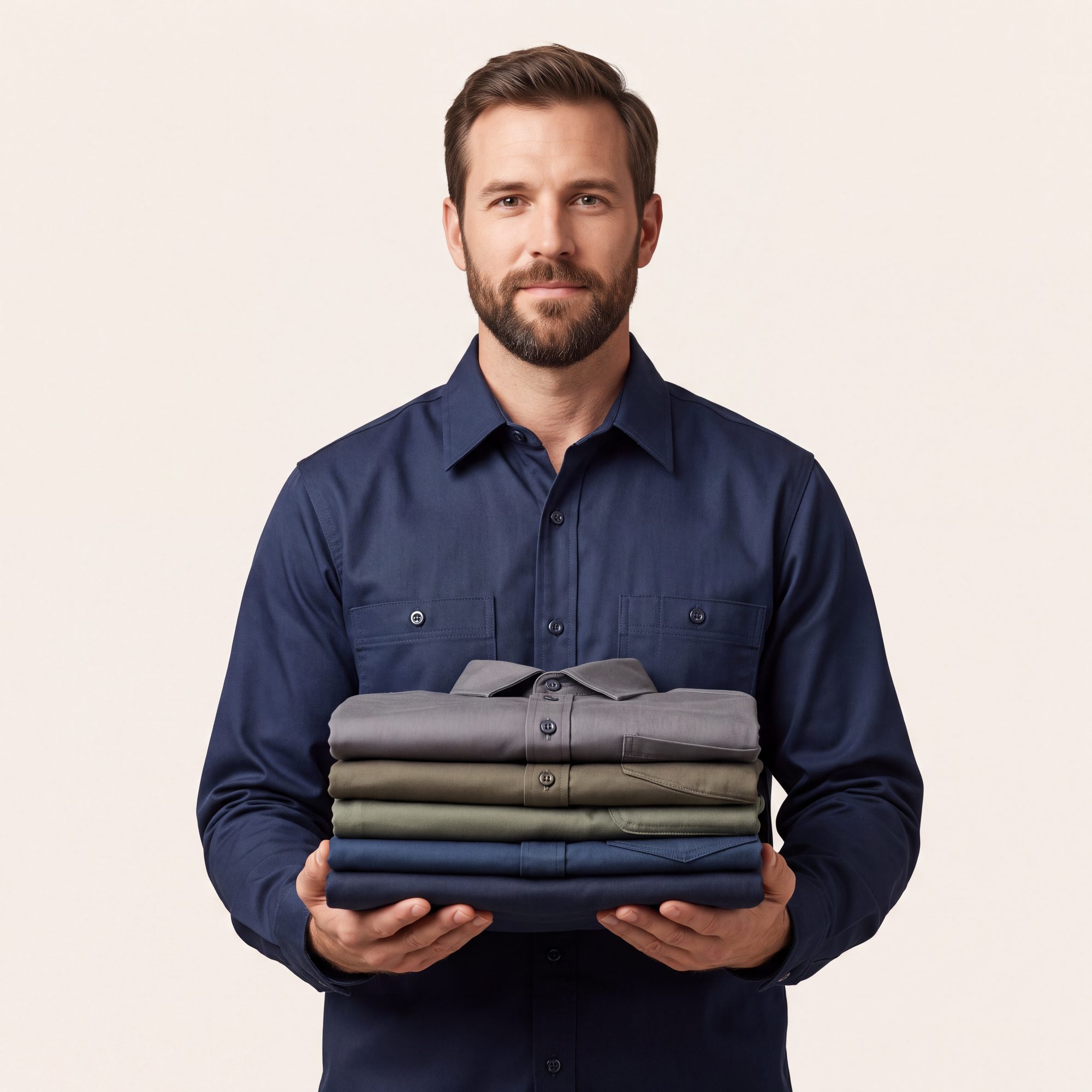
Ask anyone about their worst first day and clothing appears in the story more often than you would guess: the borrowed shirt two sizes wrong, the manager digging through a bin, the week of feeling like a guest at your own job. The new-hire kit is the cheap, systematic fix, and it doubles as a retention tool in an industry where the first two weeks decide everything.
The kit itself is simple: the role's full garment set in the right sizes, folded, labeled with the person's name, waiting on day one. If embroidery includes names or the role uses name bars, they are on it. The entire effect comes from one signal: we knew you were coming, and we prepared.
The machinery behind it is sizes-on-file plus par stock. Size runs from the interview or offer stage (a one-line question on the acceptance email works), a small buffer inventory of core sizes held either on site or at your supplier, and a standing kit spec per role so assembling one is a pick list, not a project. With that machinery, a Monday start requested on Wednesday is routine.
Turnover math funds the whole program. In hospitality and food service, where annual turnover routinely exceeds seventy percent by industry survey, every point of early retention is real money: the commonly cited replacement cost of an hourly worker runs into four figures once recruiting, admin, and training hours are counted. If a professional first day moves early attrition even slightly, kits pay for themselves without any help from the brand argument.
And the brand argument exists anyway: new hires photograph their first-day kit at a rate marketers would envy. It is organic recruiting content, staff-generated, showing your operation at its most organized. Several clients learned this from their own staff's posts before we pointed it out.
Departures matter as much as arrivals in kit logic: a return checklist (what comes back, in what condition, checked by whom) closes the inventory loop without paycheck-deduction schemes that create wage-law problems in many states. Garments that return clean go back to par stock after laundering; garments that do not get logged against the role's annual budget, which is how you learn the true garment life per position.
Start with your highest-turnover role, build one kit spec, and run it for a quarter. Track two numbers: days from hire to fully uniformed, and thirty-day retention. Both move, one visibly, one quietly, and the second one is where the money was hiding.
The kit's contents deserve one page of design thinking beyond garments: a printed one-sheet with care instructions and who-to-ask contacts, the name bar already attached, and the sizes listed on the packing slip so day-one exchanges are pre-authorized rather than negotiated. The goal is that nothing about clothing requires the new hire to ask a question in their first week, because week-one questions cost social capital they do not have yet.
Probation-period math argues for a two-stage issue in high-turnover roles: core kit on day one, premium pieces (the good jacket, the embroidered name coat) at the thirty- or sixty-day mark, framed as a milestone rather than a withholding. It concentrates spend on people who stay, and the second issue functions as a small, visible promotion everyone on the floor understands.
Track kit economics with two boring numbers per role: cost per hire outfitted and garments recovered at separation. Together they yield true uniform cost per retained employee, which is the figure that belongs beside recruiting cost in any staffing model, and the figure that makes the case, year after year, for the program being run well rather than run cheap.
The kit is also the cheapest culture document your company publishes. Everything a new hire learns in week one arrives through signals, and a prepared kit signals the three things every operator wants believed: we plan, we invest in you, and standards here are real. That message costs a duffel bag, a size question on an acceptance email, and par stock your program needed anyway. Start with one role, run one quarter, read the two numbers, and then do what every operator who runs this experiment does: extend it to the whole roster and wonder why it took a turnover crisis to try. Day one happens exactly once per employee; the kit is how you spend it on purpose.