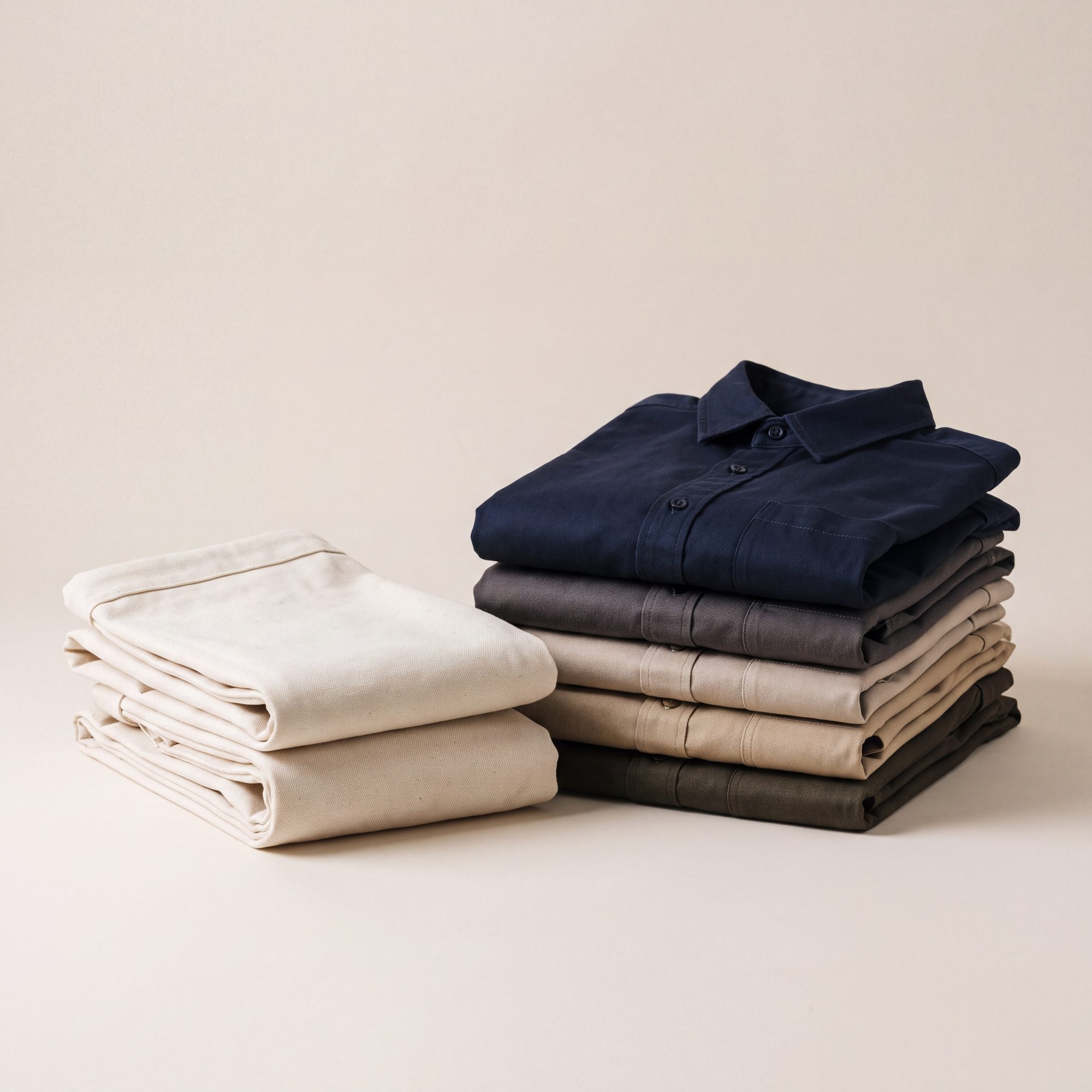
Most businesses handle uniform laundering one of two ways: staff take pieces home, or a manager runs loads in a house machine between services. Both work until they don't: a missing coat before a busy shift, a shrunk batch, a machine down on the worst possible day.
A managed program replaces that with a rhythm. You submit a pickup online with your Client ID, or it recurs automatically on a schedule you set: weekly, every two weeks, or monthly, up to four times a week for heavy operations. Your operations contact is notified, and you get a confirmation that tells you one thing in no uncertain terms: have your laundry ready for pickup.
Bags are the unit of the whole system. A standard 22 by 28 inch bag, the same size as a kitchen trash bag, holds about two loads and rides at one flat price, with everything included from pickup: detergent, softener, dryer sheets, bleach, wash and dry temperatures, and folding. Larger bags are accepted at an upcharge that is confirmed before pickup, never after.
Preferences are saved once, under your account, and applied every time: which detergent, whether whites get bleach, what temperature knits are dried at, whether shirts come back folded or on hangers. The crew that washes your first bag washes your fiftieth, which is why the folding looks the same in month six as it did in week one.
On pickup day, the driver texts when they are on the way. Bags out and ready means the stop takes ninety seconds; anything not ready rolls to the next scheduled pickup rather than holding up the route. Clean items come back folded to spec, logged against your account, and the invoice shows bags at the agreed rate.
Volume works in your favor automatically. Ordering more bags per pickup nudges the per-bag price down, so consolidating two half-full pickups into one full one literally pays. For a restaurant running four bags a week, the spread between list price and volume price covers real money over a year.
There is also a hygiene argument that operations people rarely say out loud: home washing machines are not process-controlled. A commercial cycle hits consistent temperatures and chemistry every time, which is why healthcare guidance treats professional laundering differently from domestic washing. For food service and medical clients, consistency is the product.
The right way to evaluate any laundry service is to audit one month honestly: count the hours a manager spends washing, folding, chasing missing pieces, and buying replacements for garments that died in the wrong cycle. Compare that against a flat per-bag rate. The math usually finishes the argument before the sales pitch does.
What belongs in the bag matters as much as the schedule. Uniforms, aprons, kitchen towels, bar mops, and table linens all ride happily together; personal clothing does not belong in a commercial program, and heavily contaminated items (grease-soaked shop rags, medical waste-adjacent textiles) follow separate rules entirely. A good provider tells you this before the first pickup rather than surprising you with a rejected bag after it.
Steaming deserves its own mention because it solves a different problem than washing: brand-new uniforms arrive boxed and creased, and nothing undermines a launch like fold lines across forty chests in the team photo. A steaming-only service takes cartons in and returns garments hanging and camera-ready, which is why smart openings schedule it between delivery day and orientation day.
The metric that tells you the program is working is boring on purpose: zero uniform conversations in your manager meetings. When laundry stops appearing in anyone's week, when replacements arrive before anyone chases them, and when the invoice matches the quote every single month, the program has done its actual job, which was never cleanliness alone; it was attention, returned to the business.
A worked example makes the pricing concrete. A neighborhood restaurant running three bags weekly at the published NYC rate spends less per month on complete laundering, supplies and folding included, than the part-time wages it previously paid a porter to babysit two aging machines, before counting detergent runs, machine repairs, and the manager hours spent refereeing whose whites shrank. The bags ride at forty-four dollars flat in the city, the volume curve trims each additional bag, and the invoice arrives matching the confirmation, which sounds like a low bar until you have lived with providers for whom it was not. Programs like this are boring by design: the drama a restaurant should have is in the kitchen, not the laundry room, and flat-rate bags with saved preferences are how the drama gets relocated.