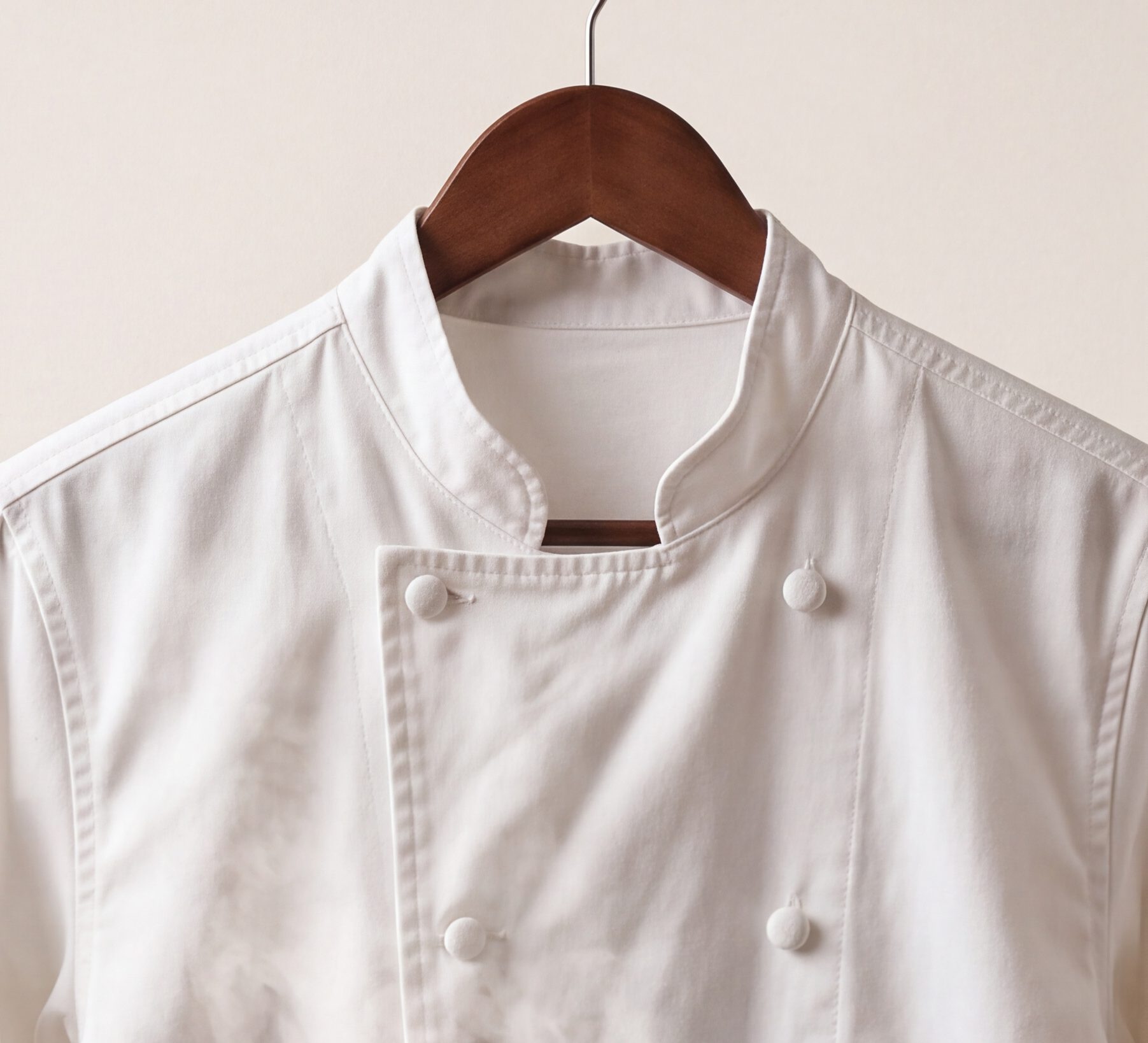
Food-service dress rules are one of the few places where a uniform decision is literally written into law, via the FDA Food Code as adopted by states and cities. The relevant provisions are short; their operational implications are not.
The Code's clothing rule is deceptively simple: food employees shall wear clean outer clothing to prevent contamination of food and equipment. Clean is doing heavy lifting there. It means the coat that started service white, the apron changed when it stops being cleanable mid-shift, and a rotation deep enough that clean is always available. Inspectors cannot see your wash log, so they read your fabric.
Hair restraints get their own provision: hats, hair coverings or nets, and beard restraints where appropriate, designed and worn to effectively keep hair from contacting exposed food and equipment. The word effective is the enforcement hook: a decorative cap perched over a full head of loose hair satisfies fashion, not the Code. Restraint style is yours to brand; coverage is not negotiable.
Jewelry ties into the same section of the Code: while preparing food, employees may not wear jewelry on arms and hands except a plain ring. It is a contamination and physical-hazard rule, and it quietly shapes glove policy and handwashing compliance too.
Aprons carry two specific behaviors worth writing into your own policy because inspectors watch for them: aprons come off before restroom visits, and they are changed when soiled to the point of becoming a contamination source. An apron rotation with enough units per shift is the difference between a rule your staff can follow and one they can only intend to.
Where uniforms meet the Code strategically: color and fabric choices can make compliance visible. Whites show soil honestly, which is why kitchens that run deep laundering programs still choose them: they are wearing the audit. Dark colors hide soil from guests and inspectors alike, which cuts both ways; some operators deliberately run white or light coats back of house and reserve dark for front of house where food contact is minimal.
Local overlays matter: city health departments grade on the totality, and appearance items (dirty aprons, missing hair restraints) are among the most commonly cited, most easily fixed violations in public inspection data. They are also the cheapest points a restaurant ever loses, because the fix is laundry logistics, not construction.
The program translation: enough coats and aprons per cook to survive the wash rotation, hair restraints staff will actually wear (branded caps beat resented nets), a jewelry line in the handbook, and a laundering rhythm that makes clean the default state rather than the aspiration. Compliance, it turns out, is mostly inventory math.
Glove and handwashing rules interact with sleeves more than policies acknowledge: long sleeves that slide toward the wrist during work either get pushed up (contact risk) or contaminated (worse), which is why many kitchens standardize on short or three-quarter coats for line roles and reserve long sleeves for roles away from open product. It is a garment-spec answer to what looks like a behavior problem.
Front-of-house staff who touch food service (bussing exposed items, garnishing at service stations) fall under the same outer-clothing and restraint logic more often than operators assume; the Code's definitions turn on food exposure, not job titles. Walk the room asking who actually touches exposed food during a rush and dress those roles to kitchen logic, whatever their section of the org chart.
Keep an inspection binder page for apparel: your laundering schedule or service agreement, your apron and coat par levels, your hair-restraint standard with a photo. Inspectors respond to systems, and thirty seconds of paper that proves clean is a process, not an aspiration, sets the tone for the entire visit.
Zoom out and the pattern across every provision is the same: the Code regulates outcomes (clean, restrained, uncontaminated) and leaves methods to the operator, which means a uniform program is literally a compliance instrument you get to design. Deep apron rotation makes the change-when-soiled rule effortless; branded caps make restraint compliance something staff do without being asked; a laundering rhythm makes clean outer clothing the building's default state. Inspectors walk in reading fabric because fabric is the visible edge of your process, and a kitchen that looks process-controlled gets its benefit of the doubt everywhere else. Dress the kitchen the way you plate the food: deliberately, and the paperwork mostly writes itself.