Every logo application method is a bet about the garment's life: how it will be washed, how close people will stand, and how long it has to look new. Pick by the life, not by the sample table.
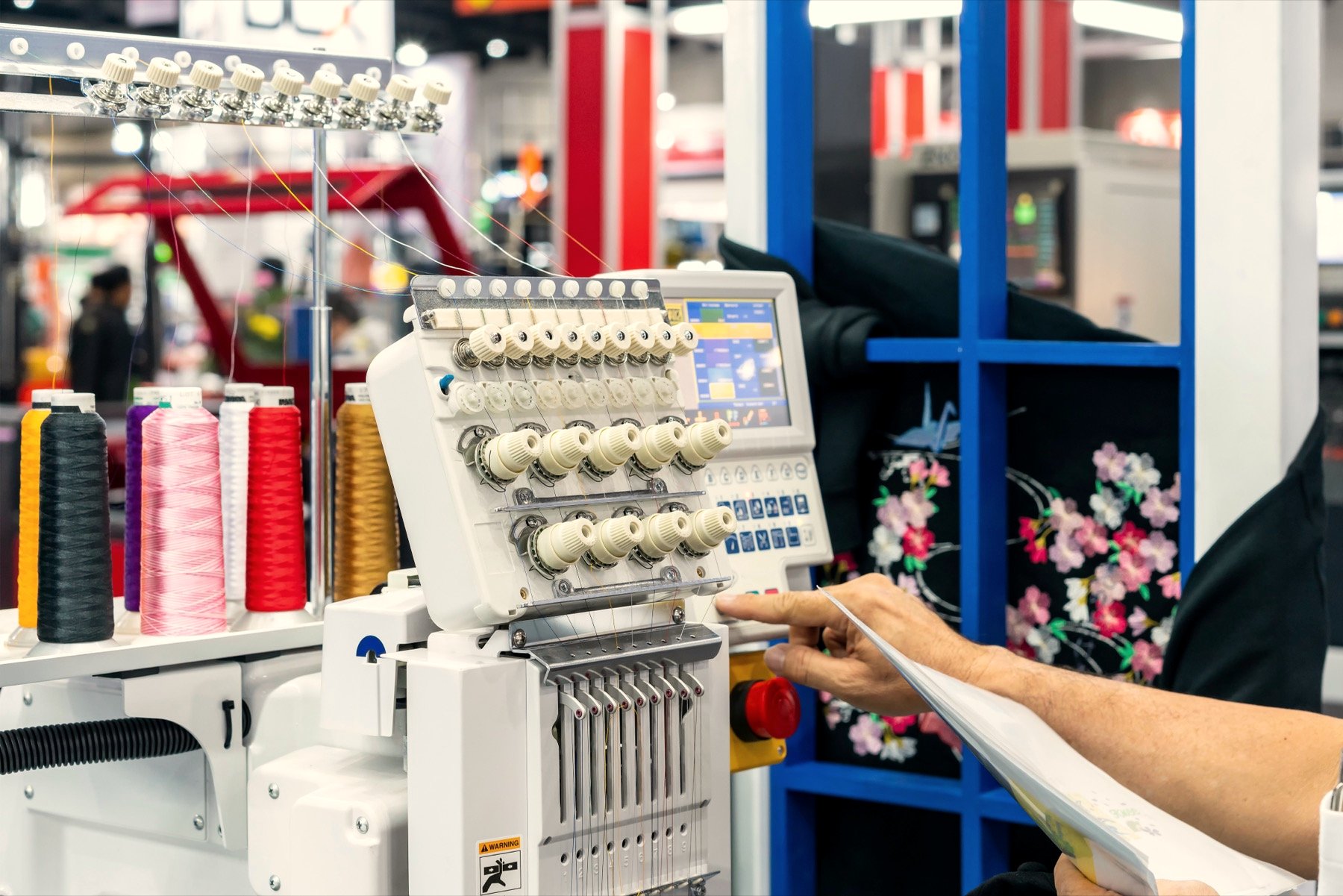
Embroidery is the professional default for a reason. Thread survives industrial laundering better than any ink, reads as premium at handshake distance, and ages by softening rather than cracking. Its limits are physical: fine gradients and small text turn to mush below a certain size, very lightweight knits can pucker under dense stitching, and each additional location adds real cost. For chest logos on polos, oxfords, coats, and aprons, embroidery wins the decade.
Screen printing owns large placements and soft-hand designs: back prints, event tees, merch lines. Cost per unit drops steeply with volume, colors are vivid, and modern inks stretch. The tradeoff is wash life: prints on daily-wear uniforms crack and fade on a timeline embroidery ignores. Print the hoodie your customers buy; embroider the polo your staff wears two hundred days a year.
Heat transfer, including full-color digital transfer, is the flexibility play: photographic detail, small runs, names and numbers per garment, and application on pieces that cannot take a hoop. Quality ranges from excellent to peeling-in-a-month depending on film and press discipline, which makes vendor competence the entire variable. For personalization at scale (names on two hundred jackets), transfers are often the only sane route.
Patches, woven or embroidered and then sewn or heat-sealed, split the difference: the emblem is produced separately at high detail, then applied. They excel on textured or technical fabrics (fleece, waffle, canvas), survive garment replacement (move the patch program, not the logo digitization), and read workwear-authentic, which fashion currently loves. Velcro-backed versions let one garment serve multiple roles.
Two technical notes that save money. First, digitization quality decides embroidery quality: the same logo digitized well and badly looks like two different companies, so keep your digitized file on account and reuse it everywhere. Second, thread color matching: tonal embroidery (navy on navy) is the quiet-luxury move for premium pieces, while contrast thread earns attention on service roles that need to be found in a crowd.
Placement discipline beats placement quantity. One mark, correctly sized, at left chest or bib, out-performs three placements shouting at each other, and it halves your decoration line item. Sleeves and back yokes are for secondary marks (certifications, location numbers), not for repeating the logo people already saw.
The synthesis: embroidery for daily-wear staff garments, print for merch and events, transfers for personalization and technical shells, patches for texture and flexibility. A program that uses all four in their lanes looks more expensive than one that forces a favorite everywhere.
Cost behavior differs by method in ways that matter at reorder time. Embroidery carries a one-time digitization fee, then per-piece cost driven by stitch count, which is why simplifying a dense logo saves money on every garment forever. Screen printing carries per-color setup each run, so it rewards big batches and punishes one-offs. Transfers price per piece almost flat, which is why they win small personalized runs. Match the method's cost curve to your ordering pattern, not just its look.
Durability testing is something you can do yourself in a week: take one decorated sample of each candidate method and run it through ten cycles of the exact laundering your program uses, industrial if industrial is the plan. The rankings that emerge from your own washer beat any brochure claim, and the ten-dollar experiment has redirected more than one program before a thousand-unit mistake.
Also decide who holds the artwork assets. Your vector logo, its embroidery digitization, and any print separations should live on your account, released to you on request. Treat decoration files the way you treat your domain name: paying a vendor to use them is normal; being unable to leave with them is not.
When a program uses several methods, govern them with a one-page decoration standard so the brand stays coherent: the logo variant, size, and placement per garment family; thread colors by number; print colors by Pantone; patch dimensions and backing by garment type. Hand that page to any decorator and the output stops depending on who happened to run the machine. It also makes quotes comparable, because vendors are finally bidding the same work. Most brand drift in uniform programs is not a vendor failing; it is the absence of this page, discovered one garment at a time. Write it once, attach it to your account, and every future order, from twenty polos to a merch drop, inherits a look that was decided rather than accumulated.