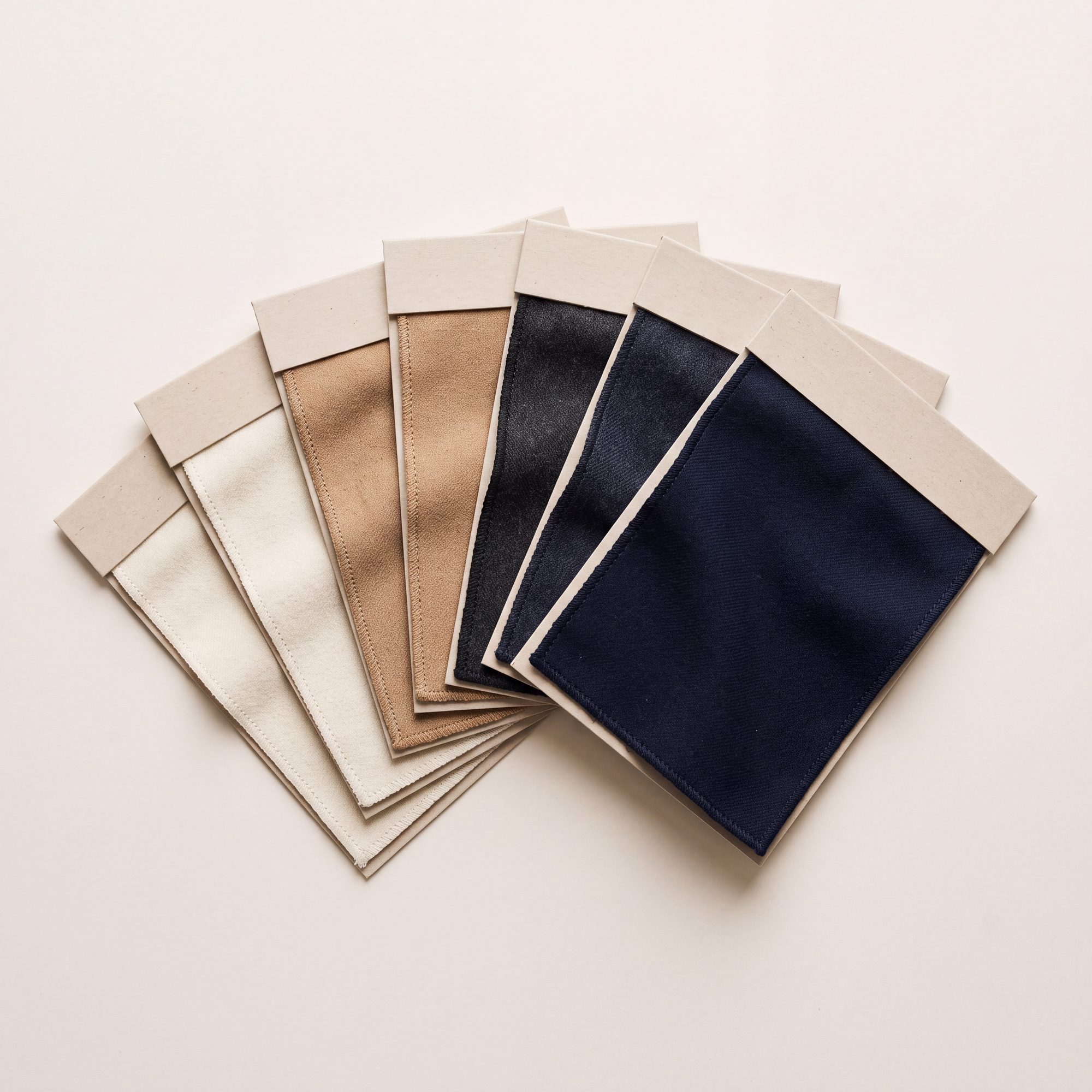
Every uniform program sits somewhere on a line between fully catalogue (proven garments, your logo embroidered on) and fully custom (designed from fabric up, exclusively yours). The right position depends on three things: how visible the role is, how hard the garment works, and how many people wear it.
Catalogue wins on speed, replacement, and cost predictability. A polo or scrub set that exists in a manufacturer's line can be reordered forever, in any size, usually within days. If a role churns staff or destroys garments (kitchens, warehouses, clinics), catalogue pieces with your embroidery are almost always the right call. You get brand presence from the logo without paying custom development on a garment that lives a hard life.
Custom wins where the garment IS the brand moment. Host stands, concierge desks, banquet teams, brand ambassadors at a product launch: these roles are photographed, remembered, and compared. A custom piece in your exact color, with your buttons and your silhouette, does work that no embroidered catalogue polo can.
The math changes with headcount. Custom carries development cost (design, sampling, pattern work), which spreads thin across a large roster and thick across a small one. A 200-person hotel can justify custom front-of-house because sixty people wear it daily. A six-person cafe probably wants premium catalogue pieces with excellent embroidery instead.
There is a middle path most suppliers do not advertise: catalogue bodies with custom details. Same proven garment, but your buttons, your collar tipping, contrast thread matched to the brand book. It costs a fraction of full custom, reorders like catalogue, and reads as custom from across a dining room.
Most strong programs blend all three: full custom for the five roles guests remember, customized catalogue for the next ten, straight catalogue for the fifteen roles that need to survive the laundry cycle. Because everything lives under one Client ID, sizes, logos, and reorders stay in one place either way.
Whichever mix you land on, insist on physical samples before production. A sample answers questions a rendering never will: how the fabric drapes on a real body, how the color reads under your lighting, whether the pocket sits where a hand actually goes. Two weeks of sampling has saved more programs than any contract clause ever written.
One honest timeline note: custom takes sampling (as little as two weeks) plus production (typically around four), and nothing goes to production until you approve that sample. If your opening is in three weeks, start catalogue now and phase custom in for season two. Under-promising and over-delivering applies to us too.
Fabric access is the quiet advantage of going custom that rarely makes the brochure. Catalogue garments come in the colors a manufacturer bet on two years ago; custom opens the mill card, which runs to thousands of weaves and shades, and dye-to-match against a Pantone when the exact one does not exist. For brands whose color is the brand, that alone can decide the question.
Protect yourself contractually on one point: ownership of the pattern and tech pack. If you paid development on a custom garment, the spec should be yours, held on your account, portable if the relationship ever ends. Suppliers who treat your pattern as their hostage are telling you something about year three; get the sentence in writing while everyone is still charming.
And revisit the split annually. Programs drift: the custom host uniform that mattered at launch may matter less than the delivery jacket your customers now photograph on doorsteps. A yearly half-hour asking which roles moved closer to the camera keeps the budget pointed at the garments doing brand work, which is the entire logic of the custom-catalogue line in the first place.
The decision often becomes obvious the moment you translate it into a walk through your own space. Stand where a customer stands in minute one and list the clothing in frame: that is your custom shortlist. Walk the back corridors at hour nine and list what is sweat-soaked, bleach-splashed, or crawling under equipment: that is your catalogue list. Most operators finish the walk with five garments on the first list and fifteen on the second, which happens to be the ratio strong programs land on anyway. Then let one supplier hold both lists under one account, because the moment custom and catalogue live with different vendors, sizes fork, logos drift between digitizations, and reorders become archaeology. The line between custom and catalogue is a design decision; the account that holds them together is an operations one.